Parking in alleys or back lanes
Keeping service access clear and neighbourhoods working Parking in alleys or back lanes
Alleys are an essential part of Calgary’s street network. They may feel quieter than main roads, but they support daily services that keep neighbourhoods running — often behind the scenes and on tight schedules.
Parking in alleys works best when access stays clear. Even short stops can block garages, waste collection, deliveries or emergency response.
This page explains:
- why parking rules apply in alleys
- how alleys support essential services
- what Parking Safety & Compliance enforces — and why
- how to avoid tickets, towing and service disruptions
Education over enforcement approach
Parking Safety & Compliance Officers take an education‑first approach in alleys whenever possible, especially where:
- parking habits may not reflect current rules
- construction or temporary changes are underway
- drivers may not expect enforcement
Officers focus on explaining:
- why access must stay clear
- how much space service vehicles need
- what “keeping it clear” looks like in practice
Enforcement may still occur when parking:
- blocks garages or service access
- interferes with waste collection or deliveries
- creates a safety risk
- continues after education
Alleys must remain safe, accessible and functional for everyone who relies on them.

What is an alley?
An alley is part of Calgary’s roadway network, just like a street. This means:
- general parking rules apply
- additional access‑related restrictions may also apply
Parking in an alley is not permitted if it:
- blocks a garage, driveway or gate
- restricts waste or recycling collection
- prevents service or emergency vehicles from passing
- interferes with posted restrictions or temporary permits
If an alley doesn’t have enough space to safely support parking, it’s not intended for parking — even if others are parked there.
Common parking issues
Most problems occur when a vehicle:
- stops “just for a minute” behind garages
- reduces the turning space for large trucks
- blocks access during collection days
- remains parked overnight without checking access needs
These situations can lead to:
- missed waste or recycling pickup
- delayed deliveries or repairs
- blocked emergency access
- enforcement or towing
How to avoid a ticket
The easiest way to avoid issues is to:
- keep alleys clear at all times
- avoid stopping behind garages or service doors
- check for construction or collection day impacts
- park on the street or in designated parking areas instead
If a space feels tight or uncertain, it usually isn’t intended for parking.
Alley parking rules
Click here to download and view all of our traffic bylaws.
Before you park: a quick checklist
Before leaving your vehicle in an alley, ask yourself these 3 questions. If the answer to any of these is no, choose another parking option:

Am I at least 1.5 metres away from any garage or driveway entrance?
Is there at least 3 metres of clear space for vehicles to pass safely?
Am I clear of waste bins, utility equipment, fire lanes and emergency exits?
Waste and recycling collection in alleys
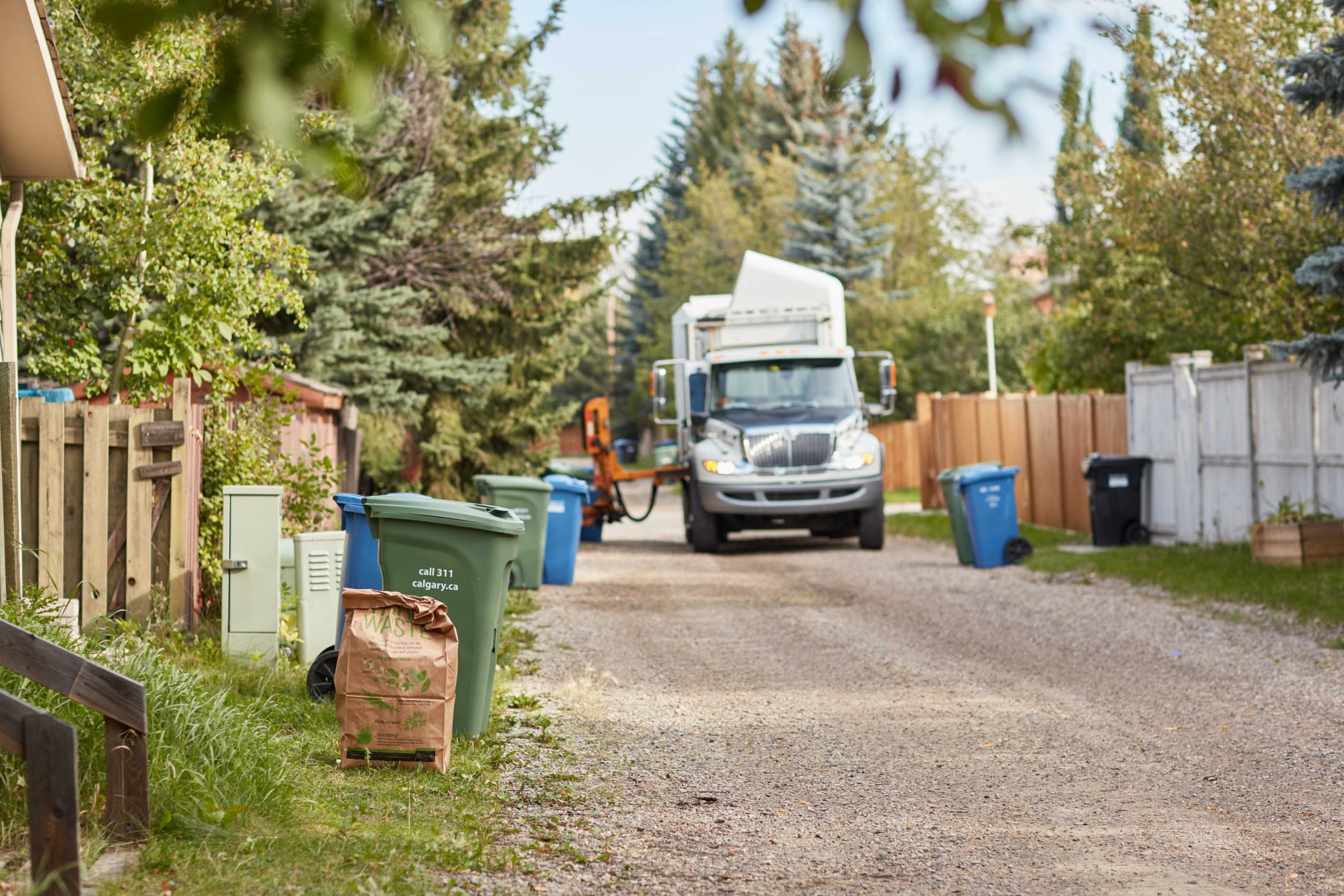
Alleys need to stay clear so waste and recycling trucks can safely enter, lift carts and return them to their proper location.
Even though carts are movable, parked vehicles can limit the space collection crews need to operate safely. When access is reduced, collection may be delayed or skipped.
Enforcement may occur if a vehicle interferes with waste or recycling collection or creates a safety issue in the alley.
Construction, renovations and large bins
If you’re renovating or placing a large bin or container:
- approvals may be required under Street Use processes
- placement must not block alley access
City teams can help connect you to the right permit or guidance before issues occur.
Myths vs. Facts about parking in alleys
Myth
Parking here must be legal since others park here all the time.
Fact
Common practice doesn’t override parking rules. Once access or safety is affected, officers must enforce consistently.
Myth
If there’s no sign, parking must be allowed.
Fact
Alleys must stay clear for shared access. Parking isn’t allowed if it blocks or restricts use — signs aren’t always required.
Myth
If waste trucks can get around me it must be legal to park here.
Fact
Even if they can get around you, waste and service vehicles need clear space to turn, stop and operate safely.
Myth
Enforcement only happens if someone complains.
Fact
Complaints often trigger responses, but officers enforce whenever access or safety is at risk.
Frequently asked questions
Can I park in an alley?
Sometimes — but only if all alley parking rules are met. Alleys are roadways and extra restrictions apply to protect access and safety.
Why did I get a ticket even though I wasn’t blocking anyone?
Many alley tickets are issued because a vehicle was too close to a garage, reduced required clearance or interfered with service access — even if it wasn’t obvious at first glance.
Can I park in front of my own garage?
Even if it’s your own property, alley parking rules still apply because alleys are shared roadways. Vehicles that block access or reduce required clearance may be subject to enforcement.
What happens if my waste or recycling isn’t collected?
Collection depends on safe access. If a truck can’t enter or operate safely, service may be delayed. Keeping alleys clear helps avoid missed pickups.
Do officers patrol alleys all the time?
Enforcement may occur during patrols or in response to reported safety or access issues. Alley rules are enforced city‑wide.
Why was I ticketed if I wasn’t blocking the cart?
Waste and recycling trucks need space to maneuver, lift and return carts safely. A vehicle can interfere with collection even if it doesn’t appear to block the cart itself.
Help or concerns?
Clear information helps prevent disruption and frustration.
- Active access or parking issue: 403‑537‑7000 (option 3)
- Questions about alley rules or permits: Contact 311
- Immediate danger or blocked emergency access: Call 911
Response times vary based on safety priorities and call volume.
Related information
These resources can help residents, visitors and event‑goers plan ahead, park responsibly and get help when access or safety is affected — especially during busy events like the Bearspaw South Feeder Main project.