Downtown parking
A parking safety education‑over‑enforcement approach Parking safely Downtown
Downtown Calgary is one of the busiest places in the city. Streets are shared by people driving, walking, wheeling, cycling, taking transit, working, delivering goods and responding to emergencies — often all at the same time.
Downtown parking works best when parking behaviour supports safety, access and movement. This page explains how to park safely and legally Downtown, why the rules exist and how understanding them can help you avoid tickets whenever possible.

Education over enforcement approach
Our Parking Safety & Compliance officers take an education‑first approach Downtown, where rules can change by block, by side of the street and by time of day.
This means officers:
- explain parking rules and the safety reasons behind them
- focus on locations where access or safety is affected
- encourage voluntary compliance whenever possible
Enforcement may still occur when parking:
- creates a safety risk
- blocks access for others
- continues after education or warnings
Downtown must remain safe and accessible for everyone who uses it.

Why Downtown parking is different
Downtown streets are high‑activity spaces with:
- heavy pedestrian traffic
- frequent transit stops and loading zones
- emergency routes and fire lanes
- construction, events and temporary closures
When parking rules aren’t followed, it can:
- block emergency vehicle access
- reduce visibility at crosswalks and intersections
- obstruct sidewalks, bike lanes and transit stops
- disrupt deliveries and business access
- create safety risks for people walking or using mobility aids
Parking rules help keep Downtown safe, accessible and moving — especially during peak hours, major events and emergencies.
How to avoid a ticket Downtown
The easiest way to avoid issues is to:
- read all posted signage before parking
- watch for time‑based changes
- keep sidewalks, intersections and hydrants clear
- respect loading zones and accessible stalls
- look for temporary signs related to construction or events
When in doubt, choose another parking option.
Construction, events, and temporary restrictions
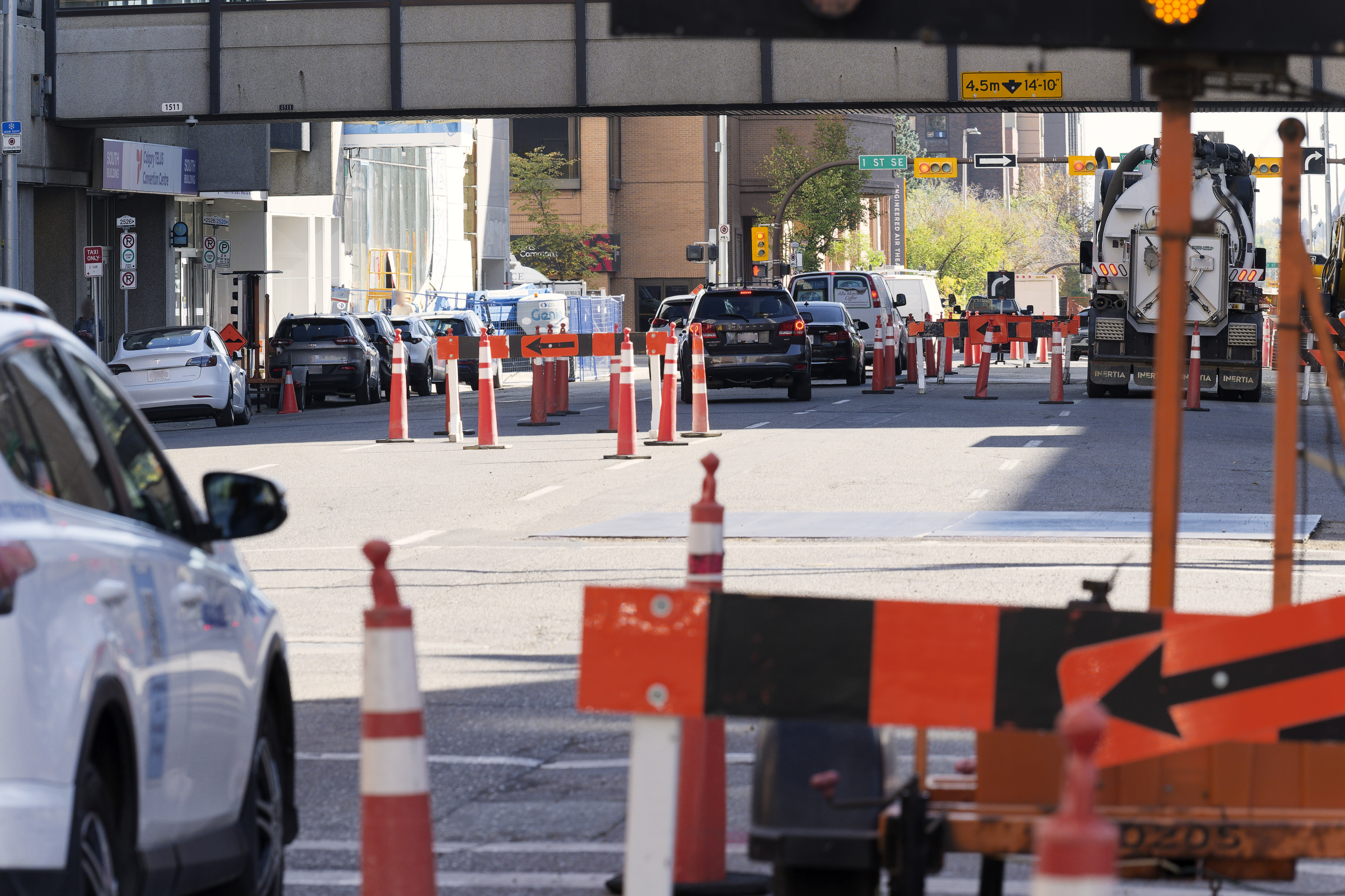
Downtown often has construction, utility work, festivals and other large events. During these times, temporary parking restrictions may be put in place to keep people safe and ensure streets continue to function.
Temporary restrictions may be marked by:
- Temporary No Parking signs
- Cones or barricades
- Approved street use permits
If a temporary restriction is in place, parking is not allowed, even if the restriction is short‑term or wasn’t there earlier in the day. Always check signs and the curb space each time you park.
Drivers are required to follow all posted parking restrictions, including temporary signs. This is supported by Calgary’s Parking Bylaw (41M2002, section 3(1)(k)), which requires compliance with posted restrictions whenever they are in effect.
People or organizations placing temporary restrictions—such as for construction or events—must do so in accordance with The City’s Streets Use Bylaw and the conditions of their permit. This helps ensure temporary restrictions are used appropriately and consistently.
Downtown parking tips
Before you park
- Read the entire sign. Downtown rules often change by time and day.
- Look up and down the block. Restrictions can change mid‑block.
- Watch for temporary signs. Construction and events can change rules quickly.
- Leave alleyways clear: Downtown alleys are for loading — not parking
During the day, most downtown alleys are reserved for commercial loading and unloading. This rule applies across downtown and is often unmarked, which is why drivers are encouraged to avoid parking in alleys and use signed roadways or parkades instead.
When choosing a spot
- Park only in clearly marked or signed spaces.
- Keep crosswalks, corners, sidewalks, bike lanes and hydrants clear.
- Respect loading zones — they support businesses and services.
- Use accessible parking only if you have a valid placard or licence plate.
If you're unsure
If a space feels unclear, it’s usually not intended for parking. Choosing another spot is often the easiest way to avoid a ticket.
Common Downtown parking issues
Reading Downtown parking signs
Reading Downtown parking signs
Downtown parking rules can change by:
- time of day
- day of the week
- block or side of the street
Read the entire sign — not just the first line. When more than one parking rule is posted on a sign, drivers must follow all posted restrictions. This means the most restrictive rule applies while it’s in effect.
For example, if one part of a sign allows parking but another limits the time, days, or conditions, the stricter rule takes priority during the times it applies. If a time‑ or day‑based restriction is not active, it doesn’t override the other posted rules.
Rule of thumb:
- ✅ If you’re sure every posted rule allows you to park at that moment, you’re okay.
- ❌ If you’re unsure, it’s safer to choose another space.
This approach is supported by Calgary’s Parking Bylaw. Section 3(1)(k) requires drivers to comply with all posted parking restrictions, not just the one that seems most permissive.
No Parking/Stopping zones
No Parking/Stopping zones
No Parking and No Stopping zones exist to protect:
- visibility
- transit access
- traffic flow
No Stopping zones are enforced at all times. Even short stops can block sightlines, transit or emergency access.
Sidewalks and crosswalks
Sidewalks and crosswalks
Blocking pedestrian space can create serious safety and accessibility risks — especially Downtown where foot traffic is high.
Vehicles must not stop or park:
- on sidewalks or curb ramps
- on crosswalks
- where they interfere with pedestrian movement or sightlines
Driveways and intersections
Driveways and intersections
Parking too close to corners, driveways or intersections reduces visibility and makes turning movements less safe.
These rules protect sightlines for:
- people walking and wheeling
- drivers turning or exiting driveways
- cyclists and transit operators
Fire and emergency access
Fire and emergency access
Fire lanes and hydrant clearances must stay open at all times.
Blocking emergency access can delay response when seconds matter and may result in immediate enforcement or towing.
Loading zones
Loading zones
Loading zones are regulated curb spaces that support Downtown businesses.
Vehicles must follow:
- posted loading‑only restrictions
- time limits
- vehicle type requirements
Passenger vehicles parked in loading zones may be ticketed.
Accessible parking misuse
Accessible parking misuse
Accessible stalls are reserved for vehicles displaying a valid accessible parking placard or licence plate.
Misuse — even briefly — can block access for someone who needs it and may result in enforcement.
Myths vs. Facts about parking Downtown
Myth
If there’s no sign right beside me, it must be okay.
Fact
Downtown restrictions often apply by time, block or side of the street. Signs can change mid‑block and temporary restrictions may apply for construction or events.
Myth
Everyone parks like this so I can too.
Fact
Common behaviour doesn’t override posted rules. Enforcement focuses on safety and access, especially where issues affect others.
Myth
Loading zones are only for big trucks.
Fact
Loading zones are regulated spaces designed to support deliveries and services. Passenger vehicles parked there may be ticketed.
Myth
Enforcement Downtown is more strict.
Fact
The same bylaws apply city‑wide. Downtown simply has higher activity, more time‑based rules and greater safety risk when access is blocked.
Frequently asked questions
Why is parking enforced more strictly Downtown?
Downtown streets are high‑activity spaces used by many people at the same time. Parking rules are enforced to protect safety, maintain access for emergency and service vehicles, and keep sidewalks, bike lanes and transit stops clear. Enforcement helps Downtown function safely and predictably for everyone.
Is Downtown parking enforced differently than in other parts of the city?
The same bylaws apply city‑wide, but downtown has more signs, time‑based restrictions, loading zones and temporary changes due to construction or events. Because of higher activity and safety risks, issues downtown are more likely to generate complaints or require immediate response.
Why did I get a ticket even though I was “only there for a few minutes”?
Some Downtown areas — such as No Stopping zones, fire lanes, crosswalks and accessible stalls — are enforced at all times. Even short stops can block visibility, emergency access or pedestrian movement and may result in a ticket.
Why does enforcement sometimes happen in one block but not another?
- Parking rules can change by location and time: Downtown rules may vary by block, by side of the street and by time of day.
- Officers enforce what’s posted: Parking Safety & Compliance Officers enforce based on posted signage, safety risk and reported concerns.
- Different blocks, different uses: Differences are usually due to different curb uses, loading needs, or temporary restrictions such as construction or events.
Why are loading zones and fire lanes enforced so strictly?
Loading zones and fire lanes support Downtown businesses, transit operations and emergency response. When these spaces are blocked, deliveries are delayed, traffic backs up and emergency response times can be affected. Clear access is critical.
Why can’t I park in front of a business if I’m picking something up quickly?
- Downtown curb space is carefully managed. What feels like a short stop can block sightlines, bike lanes, sidewalks, or transit access.
- Short stops have dedicated spaces. Loading zones and passenger pick‑up areas are designed for quick stops.
- Other areas may be restricted. Some spaces are kept clear for safety, accessibility or traffic flow — even for a few minutes.
How do temporary “No Parking” signs work downtown?
Temporary parking restrictions are used for construction, events, utility work and emergency access. These signs are enforceable for the time and location shown, even if they’re in place for a short period. Drivers are responsible for checking signs each time they park.
What’s the most common mistake people make when parking Downtown?
Not reading the entire sign. Downtown signs often include multiple time periods, vehicle types or restrictions. Looking only at the first line is one of the most common reasons people receive tickets.
What’s the easiest way to avoid a parking ticket when Downtown?
The easiest way to avoid a parking ticket Downtown:
- Read every sign before leaving your vehicle: Downtown signs often include multiple time periods and rules.
- Watch for time‑based and temporary restrictions: Rules can change by time of day, construction, or events.
- Keep shared spaces clear: Don’t block sidewalks, intersections, fire hydrants, bike lanes or transit stops.
- Use loading zones and accessible stalls only as intended: These spaces support deliveries, transit and people who rely on them.
- When in doubt, choose another parking option: A short walk is better than a ticket.
Why does The City focus on education instead of enforcement first?
Education helps people understand the rules and avoid repeat issues. Parking Safety & Compliance Officers aim to explain the “why” behind parking rules whenever possible. Enforcement is used when safety, access or compliance is at risk.
What if I disagree with a parking ticket?
Information on ticket review and appeal options is included on every ticket and available on calgaryparking.com. Each case is reviewed based on the information and evidence available.
Help or concerns?
Clear information helps prevent disruption and frustration.
- Active access or parking issue: 403‑537‑7000 (option 3)
- Questions about accessible parking rules: Contact 311
Response times vary based on safety priorities and call volume.
Related information
These resources provide additional guidance, applications and support related to accessible parking.